IPL means Intense Pulsed Light. It is a prescription light treatment that doctors may use when dry eye involves the eyelid oil glands. This page explains the term, shows where IPL fits, and helps you prepare for a visit.
Unique Eye Care and Optical includes IPL in its dry eye information. Dr. Inna Gaston decides whether it belongs in a care plan. Call to confirm current availability and the right appointment type.
Our office is on Bissonnet in Houston. Request an appointment, or call (713) 522-2007.
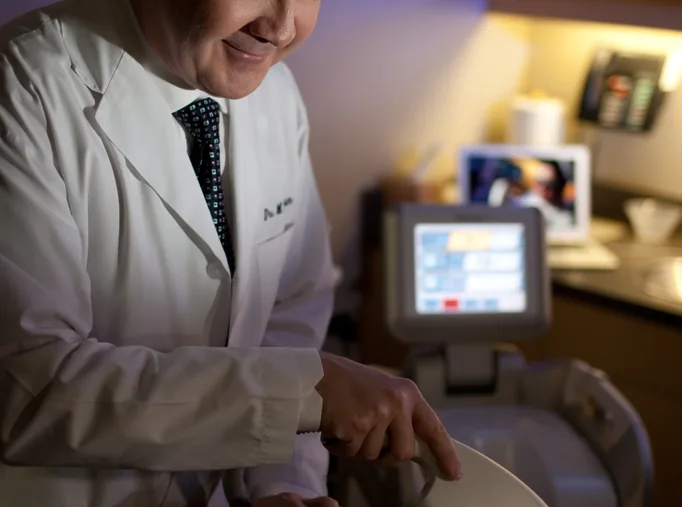
IPL treatment in a clinic setting. Licensed CC BY-SA 2.0 on Wikimedia Commons; not a Unique Eye Care and Optical patient or photo.
Why an eye exam comes before an IPL decision
Dry eye is not one single problem. Tears contain water, oil, and other components that work together. The meibomian glands sit along the eyelids and add oil to the tear film. When these glands do not work as expected, tears may evaporate too quickly. Doctors call this meibomian gland dysfunction, or MGD.
Symptoms alone do not show which part of the tear system needs attention. Burning, watering, fluctuating vision, or a gritty feeling can have more than one cause. A dry eye evaluation helps the doctor look for patterns instead of choosing a device from a symptom list.
An eye evaluation connects questions about IPL to the broader dry eye care path. It keeps the treatment name separate from the diagnosis.
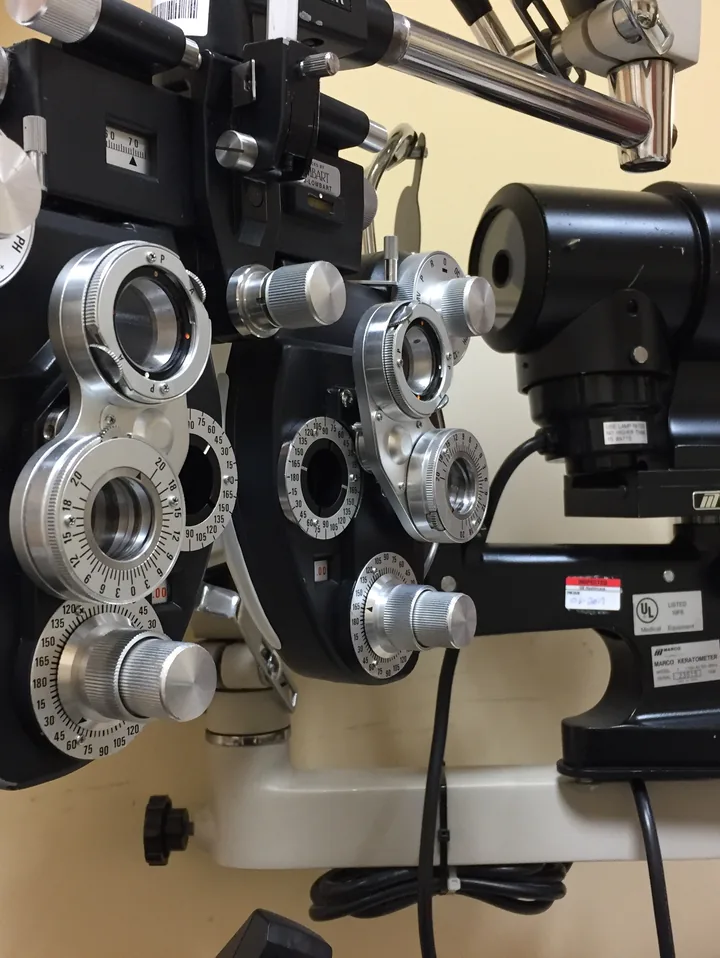
A phoropter is used for vision testing. Dry eye evaluation may require other tests based on the patient's symptoms and exam.
What IPL means in dry eye care
IPL sends controlled pulses of broad-spectrum light to the skin. In the United States, the FDA describes this device class for managing signs of dry eye disease related to MGD. The FDA summary says the light is applied to skin on the cheek area while the eyes remain fully covered with protective eyewear.
The same FDA summary describes IPL as an added treatment, not a replacement for every other part of dry eye care. A doctor may discuss it beside options such as lubricating drops, warm compresses, or expression of the meibomian glands. Your plan may include some of those options, another option, or no IPL.
Official labeling matters because it sets boundaries. The FDA De Novo summary for IPL devices used in dry eye care describes specific age, skin-type, symptom, and diagnosis criteria. It also lists warnings and conditions that require screening. Use those details as questions for the doctor, not as a self-test.
What a dry eye evaluation may cover
A useful visit starts with context. Tell the team when discomfort appears, whether vision changes through the day, and what you have tried. Bring a medication list. Some medicines and skin products can affect light-based care.
The doctor may examine the eyelids, tear film, eye surface, and oil glands. Exact tests depend on the patient, symptoms, and equipment used.
The visit should end with a clear next step. That may be home care, more testing, another dry eye service, IPL, or no device treatment. Ask what problem each step addresses.
If IPL enters the plan
Ask where the light will be applied and how the team will protect your eyes. Ask what you may feel during the visit, what skin response can occur afterward, and what instructions apply before and after treatment. Do not rely on a general website for a complete risk list.
Ask how the team will decide whether the plan is working. A sound answer names the symptom or clinical sign the doctor will follow. It should not promise the same response for every patient.
What did the exam show about my tear film and eyelid glands?
Why are you considering IPL instead of, or along with, another option?
What parts of my medical, eye, skin, and medication history affect this choice?
What should make me call the office after a visit?
When will we review the plan again?
Visit Unique in Houston
Unique Eye Care and Optical is at 2431 Bissonnet St. in Houston. Use the location page to plan the visit. Call first if you need to confirm access or appointment details.
You can also read about dry eye care, meet the doctor, find the office, or book a visit.
What the exam must decide
Not everyone with dry eye has MGD. IPL does not replace an eye exam or every other form of care. Your history, exam findings, skin type, medicines, and the current device label all matter.
Ask whether IPL is currently available at Unique and why the doctor would or would not include it in your plan. Do not book a treatment-specific visit until the office confirms the right appointment type.
Questions people ask
What does IPL stand for?
IPL stands for Intense Pulsed Light. In dry eye care, a doctor may discuss it when the exam shows a pattern related to the eyelid oil glands.
Is IPL for every type of dry eye?
No page can make that claim. The FDA device summary describes a defined use related to MGD. A doctor must decide whether that use fits your diagnosis, skin type, age, history, and current labeling.
Does IPL replace eye drops or warm compresses?
Not automatically. The FDA describes IPL as an added treatment used with other dry eye options. Your doctor decides which parts belong in your plan.
Can I book IPL without an exam?
Book or call to start the conversation. The clinical team decides which visit and evaluation you need before any IPL decision.
Where is Unique Eye Care and Optical?
The office is at 2431 Bissonnet St. in Houston, TX 77005. Use the location page for the current map and call before travel if you need to confirm details.
 (713) 522-2007